




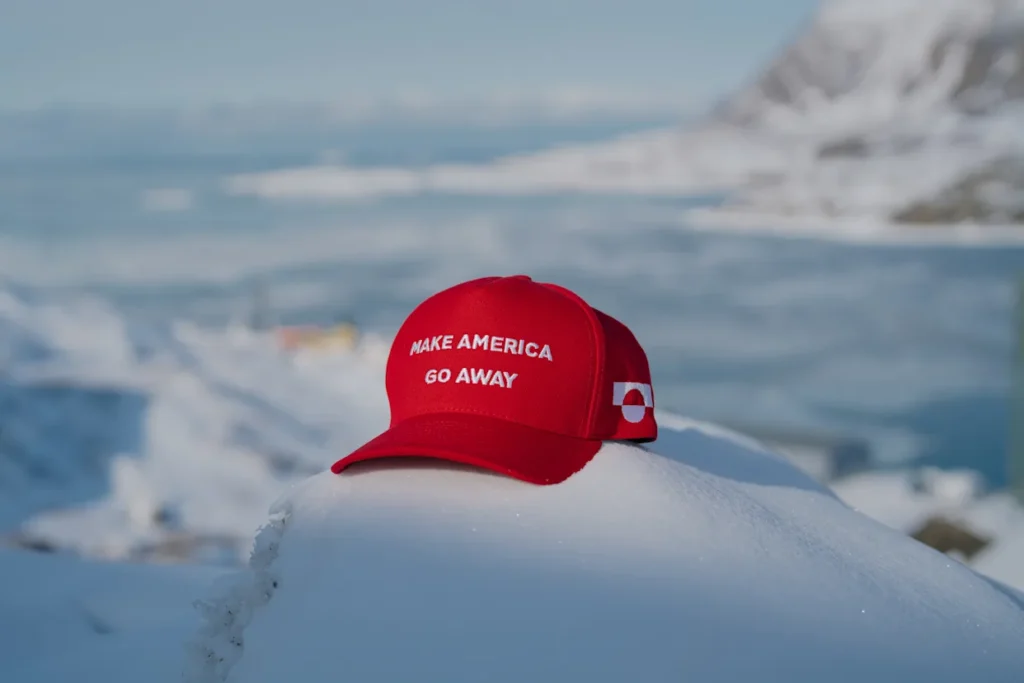
The prime minister of Greenland emphatically rejected any notion that the massive Arctic island might become part of the United States after President Trump’s announcement that he had appointed a special envoy to the territory.
“Our future is decided by ourselves,” Jens-Frederik Nielsen wrote in a Facebook post on Monday. “Greenland is our country.”
Trump has been vocal about his desire to annex Greenland since his first term in the White House, arguing that the massive, sparsely populated island is critical for America’s national security.
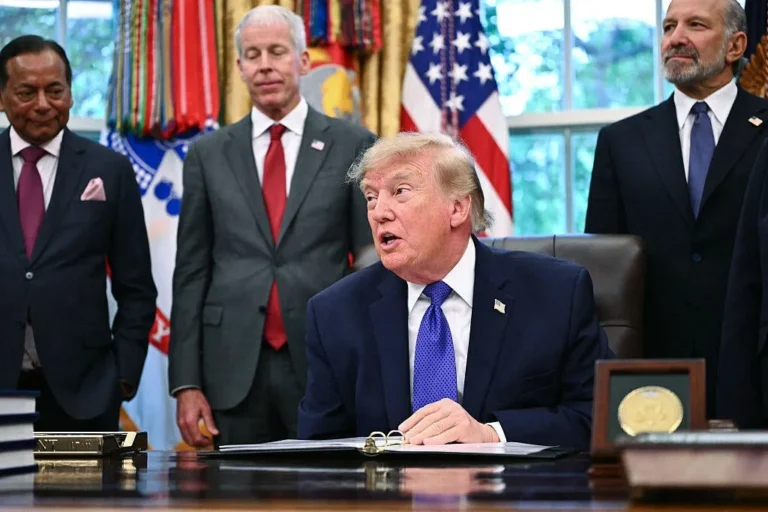
“We have to have it,” Trump told reporters when asked about his decision to name Louisiana Gov. Jeff Landry as special envoy to Greenland. In his own statement about his new role, Landry explicitly stated that his goal is to “make Greenland a part of the U.S.”
For now, Greenland belongs to Denmark. Although the island was treated as a Danish colony for hundreds of years, its citizens have had authority over what happens within its borders since the late 1970s. That freedom includes the power to decide whether they want to remain a part of Denmark, join the U.S. or become an independent nation.
For their part, Greenlanders appear to have little interest in joining the U.S. voluntarily. Polls show that 85% of the island’s citizens oppose the idea, and nearly half of them see Trump’s interest in Greenland “as a threat.”
“National borders and the sovereignty of states are rooted in international law. … You cannot annex other countries,” Nielsen and Danish Prime Minister Mette Frederiksen wrote in a joint response to Trump’s appointment of a special envoy.
During a joint address to Congress in March, Trump included a message “for the incredible people of Greenland” in which he said he strongly supports their “right to determine your own future.” But about 20 seconds later, the president said he thinks the U.S. will acquire the territory “one way or another.” Earlier this year, he refused to rule out taking Greenland by force.
Later that month, Vice President JD Vance traveled to Greenland with his wife, Usha Vance, and a delegation of high-ranking Trump administration officials, including national security adviser Mike Waltz. During the trip, Vance accused Denmark of “underinvesting” in the territory.
“Our message to Denmark is very simple: You have not done a good job by the people of Greenland,” he said.
Trump’s desire to claim Greenland for the U.S. had largely fallen out of the news in the ensuing months, but Landry’s appointment shows that the president has not abandoned the pursuit.
Greenland is not a major economic power, nor does it have a strong military to bolster U.S. forces. Its population is tiny and would clearly not welcome American ownership with open arms. So why does Trump want it so badly, to the point where he’s floated military action against a NATO ally to get it?
For one thing, it’s huge
While many maps tend to exaggerate Greenland’s size, it’s still massive — at 836,330 square miles, it’s more than three times the size of Texas.
It’s considered to be the world’s largest island and, on its own, would be the 12th-largest nation on Earth. It is also the least densely populated territory on the planet. More than 80% of its 56,000 residents occupy about a dozen towns along its coast; its vast, icy interior is essentially uninhabited.
Adding Greenland would allow the U.S. to leapfrog Canada and become the second-largest country in the world — although it would still be a distant second to Russia.
Location, location, location
Not only is Greenland big, but it’s also in a highly strategic area. Key sea routes that connect Northern Europe to North America run along its coastline, making it a critical location for managing both international shipping and military power in the Arctic.
The fabled Northwest Passage to the northern edge of Canada and the Arctic Bridge route, which connects Scandinavia and Russia to North America’s East Coast, both hug Greenland’s southern tip.
Greenland is also home to an American military missile defense base located far north of the Arctic Circle, a prime position to monitor — or potentially intercept — any Russian rockets headed toward the U.S. mainland.
Because of climate change, which has made many areas of the Arctic impossible to navigate due to melting ice, Greenland’s position will only become more important. Within the next 25 years, experts predict that enough ice will melt to open up the Transpolar Sea Route, a shipping lane that would cut straight across the North Pole and create a more efficient path between Asia and the Atlantic.
The U.S. and its allies are already jockeying with Russia and, to a certain extent, China, over control of this swiftly evolving area of the globe. Owning Greenland would give the U.S. an enormous advantage in this geopolitical tug-of-war.
It’s changing
Like the sea ice that surrounds it, the ice that blankets Greenland’s vast interior is also melting. Nearly 2,000 square miles’ worth of ice has disappeared from the island’s surface over the past four decades. NASA refers to Greenland as a “canary in a coal mine” for climate change.
Greenland’s melting ice is one of the biggest drivers of global sea level rise. It’s also causing a key ocean current known as the “great global ocean conveyor belt” to slow down, which could have huge implications for weather around the world.
But where climate experts see reasons to worry about Greenland’s ice melt, others see opportunity. That’s because Greenland is home to huge yet largely untapped stores of rare earth minerals needed to make a wide range of high-tech products — everything from smartphones to computers to fighter jets to green energy technologies.
The U.S. used to be the world’s top producer of rare earth minerals. Today that title goes to China. To counter China’s dominance, U.S. leaders have moved to increase the United States’ own mineral mining, while also working to open up foreign sources for the materials. Greenland’s receding ice could set off a mineral “gold rush,” as large deposits of high-value minerals become accessible for the first time.
Greenland currently puts strict limits on mining within its territory and has banned oil and gas extraction entirely over environmental concerns. Full command of the island could give the U.S. the power to roll back those restrictions, make larger swaths of the island available for development and seize a larger share of the profits that result.
Many Greenlanders see a ramped-up mining industry as a key to their economic future, but even local support might not be enough to turn the dream of a mineral windfall into a reality. Foreigners have been coming to Greenland seeking to extract its riches for centuries, only to be turned away by its harsh terrain and brutal climate. Some experts believe that even with modern technology, tapping Greenland’s mineral resources may be too difficult and expensive to make large-scale mining economically viable.