





Florida has executed a death row inmate 50 years after he raped and murdered his brother’s 13-year-old stepdaughter while Texas put an inmate to death for killing two Christian music producers during a robbery.
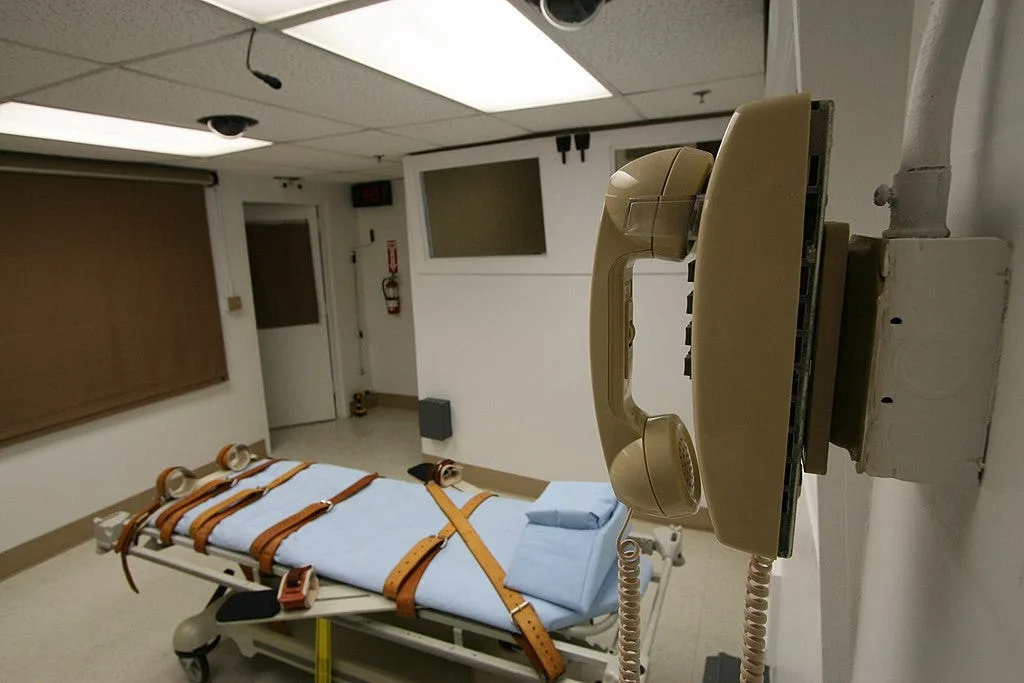
The same-day executions by lethal injection came about an hour and a half apart on Thursday, April 30. First Florida executed James Ernest Hitchcock for the 1976 murder of 13-year-old Cynthia “Cindy” Driggers. Hitchcock was pronounced dead at 6:12 p.m. ET.
“I’ve lived with this for 50 years. I can breathe today,” one of Driggers’ cousins, Chip Driggers, told reporters after the execution. “Free at last, free at last. Our monster is dead.”
Also Thursday, Texas executed James Broadnax for the 2008 double murder of Stephen Swan and Matthew Butler, two producers of Christian music killed during a robbery outside their studio in the Dallas suburb of Garland. Broadnax was pronounced dead at 7:47 p.m. ET.
“Texas got it wrong,” Broadnax said as he lay on the execution gurney, according to the Texas Department of Criminal Justice. “I’m innocent. The facts of my case should speak for itself, period.”
Hitchcock’s and Broadnax’s deaths bring to 10 the number of executions so far in the U.S. this year. Five more are scheduled next month in Florida, Tennessee, Texas, Oklahoma and Arizona.
Here’s what you need to know about Thursday’s executions and the crimes the inmates committed.

Florida executes James Ernest Hitchcock
Florida executed James Ernest Hitchcock 50 years after he killed 13-year-old Cynthia “Cindy” Driggers, his brother’s stepdaughter. On July 31, 1976, Hitchcock went into Cindy’s bedroom in the middle of the night, raped her, and then beat and choked her to death when she said she was going to tell her mom, court records say. Cindy would have turned 14 three days later.
Hitchcock initially confessed to the crime to police, though he later took it back and accused his brother of the killing.
Hitchcock was convicted of first-degree murder and sentenced to death. At his sentencing hearing, Florida’s then-Ninth Circuit Judge Michael Cycmanick said that he had “great difficulty in expressing the horror, suffering and physical and emotional trauma the child victim must have experienced in this case.”
Cindy’s family told USA TODAY this week that 50 years was far too long to wait for justice for the 13-year-old girl, described as a loving big sister who was always looking out for her four younger siblings and dreamed of one day becoming a flight attendant.
Cindy’s mother, Helen Judy Hitchcock said that she and her other children were “lost” when Cindy was killed.
“They didn’t know what to do,” Hitchcock said through tears. “Me, I just kept setting a plate at the table for her. I did that for a long time.”
Hitchcock said that she still struggles every Aug. 3, when her daughter should be celebrating her birthday. Cindy would have turned 64 this year.
“I just miss her,” she said. “I would love to have seen what she is like grown up, to find out, did she really become a stewardess? Would she have been tall (like some of her siblings) or shorter like me? Just everyday things. I’d just love to see her.”

Texas executes James Broadnax
Texas executed James Broadnax for the 2008 double murder of Stephen Swan and Matthew Butler after he lost a vigorous fight for a reprieve.
Broadnax’s case gained national attention for what his attorneys say was an unfair trial that saw prosecutors eliminate almost every potential Black juror and use Broadnax’s own rap lyrics against him. The result, defense attorneys argued in a recent U.S. Supreme Court filing, transformed Broadnax’s “artistic expression into a death warrant.”
Big name rappers including Travis Scott, T.I., Killer Mike and Young Thug threw their support behind Broadnax, arguing to the Supreme Court that rap music has been increasingly used as evidence against defendants “in a manner that exploits and perpetuates stereotypes.”
Texas prosecutors defended the practice, saying that lyrics Broadnax wrote behind bars after the murders showed jurors his “extreme lack of empathy, regret, remorse, and accountability.” They also argued that it was not about race.
“If Johnny Cash had ever been on trial for murder, particularly if the murder was alleged to have occurred in Reno, no doubt his ‘Folsom Prison Blues’ lyrics (‘I shot a man in Reno, just to watch him die’) would have been admissible during the punishment phase of his trial,” they argued.
In the end the Supreme Court denied Broadnax’s appeal based on the rap lyrics, as well as two other appeals based on the jury selection process and on a recent confession to the murders by his cousin.

When is the next execution?
The next executions in the U.S. are set for May 14, when two states are planning to put inmates to death.
Oklahoma is set to execute Raymond Eugene Johnson for the 2007 murder of his ex-girlfriend and her baby daughter in Tulsa. That same day, Texas is planning to execute Edward Lee Busby for the 2004 robbery and murder of a retired Texas Christian University professor.
So far this year, three U.S. states have executed eight inmates. Thirteen more are scheduled so far for 2026 but that figure is sure to rise as governors can sign death warrants at any time.
Among the most notable upcoming executions is that of Christa Pike in Tennessee for the 1995 torture murder of her romantic rival. If Pike’s execution moves forward in September, she’ll be the first woman put to death in the state in more than 200 years.
Amanda Lee Myers is a senior crime reporter who covers the death penalty, cold case investigations and breaking news for USA TODAY. Follow her on X at @amandaleeusat.
This article originally appeared on USA TODAY: Texas, Florida carry out back-to-back executions on same day