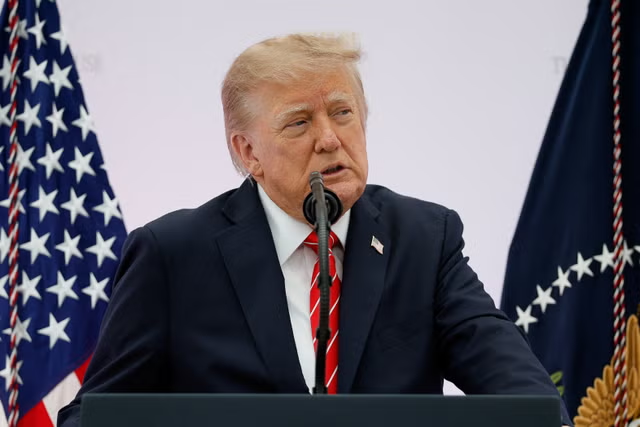






US President Donald Trump has called off plans to livestream the execution of former US army psychiatrist Nidal Hasan by firing squad.
Trump had previously said he approved of showing the death of the Fort Hood attacker, while Vice-President JD Vance cast doubt on whether it would happen and said he would not watch it.
Trump’s decision to cancel the livestream came after widespread criticism in the US and globally. On Thursday, he said that “many very good and well meaning people would rather not watch him die”.
“I think streaming the execution for all to see might have been a strong deterrent for the World to witness how America deals with Terrorists and SCUM like Hasan,” Trump said.
“He will die, as scheduled, by firing squad, but this event will not be streamed,” the president added in the post on Truth Social.
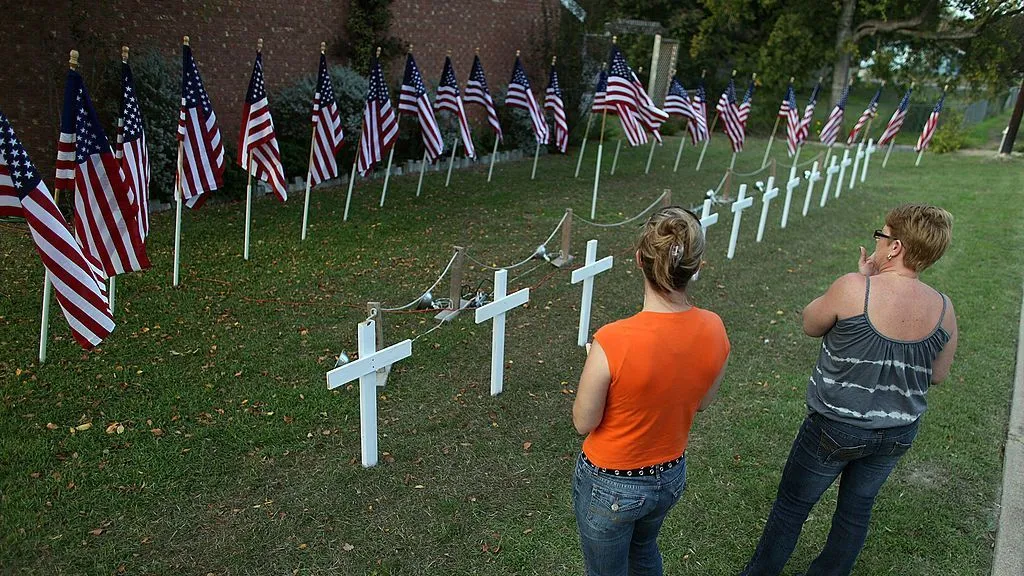
Hasan fatally shot 13 unarmed US military personnel and injured 32 others at a military base in Texas in 2009. His execution by firing squad will be the first military execution in more than 60 years.
Trump said the families of the victims can still view the execution in person if they wish.
“They deserve to witness JUSTICE!” he said.
After the Pentagon announced last week that it would execute Hasan on 3 December 2026 by firing squad and livestream the event, a cascade of criticism quickly followed from human rights groups and many others. The United Nations called the plans “abhorrent”.
While there were more than 2,700 executions across 17 countries last year, only two nations carried them out publicly. According to Amnesty International, 11 public executions were known to have been carried out in Iran in 2025 and another six in Afghanistan.
US Defence Secretary Pete Hegseth defended his decision to air Hasan’s execution online, saying that “people need to understand that there’s serious consequences for these types of things”.
But as criticism mounted, Trump appeared to hedge his support, saying on Friday that he “absolutely” approved of the livestream plan, but adding that the Pentagon was still “making a determination” on it.
The president also called Hasan “totally nuts”.
“I really don’t care how he goes, as long as he goes, and I think that the death penalty is a very worthy way of going for him,” he said.
After Trump announced he called it off, a Pentagon spokesman said Hegseth had spoken with the US president beforehand.
“The Secretary supports the President’s decision, and they are completely aligned,” the spokesman Sean Parnell said.
John Galligan, a lawyer for Hasan working primarily on civil issues, told reporters that Trump’s decision to cancel the livestream of his execution “comes as no surprise”.
“It was initially a dumb decision and statement by Hegseth to livestream any execution – and it violated the Army’s own regulation,” Galligan said.
He said Hasan is paralysed from the chest down, something that Trump “allegedly didn’t even know” when he approved the livestream plan.
“The damage has already been done – the Army is now just trying to clean up the mess,” Galligan said. “It will permanently remain a stain on our military justice system.”
He added that it was not clear if Hasan was aware yet of Trump’s “reversal” of the livestream decision.
Hasan opened fire in a crowded medical building where deploying soldiers were awaiting check-ups and vaccines.
He later admitted in court that he was the gunman and apologised for “any mistakes”.
He said during his court martial in 2013 that he believed he was protecting Muslims and the Taliban in Afghanistan from the US military.
The killings on 5 November 2009 were the deadliest ever non-combat attack on an American military base.
US military law requires that a military execution be approved by the US president.
It also requires appellate review, when a higher court inspects the decision and gives a final judgement on its legality to move forward.