





What to know about the Iran war today:
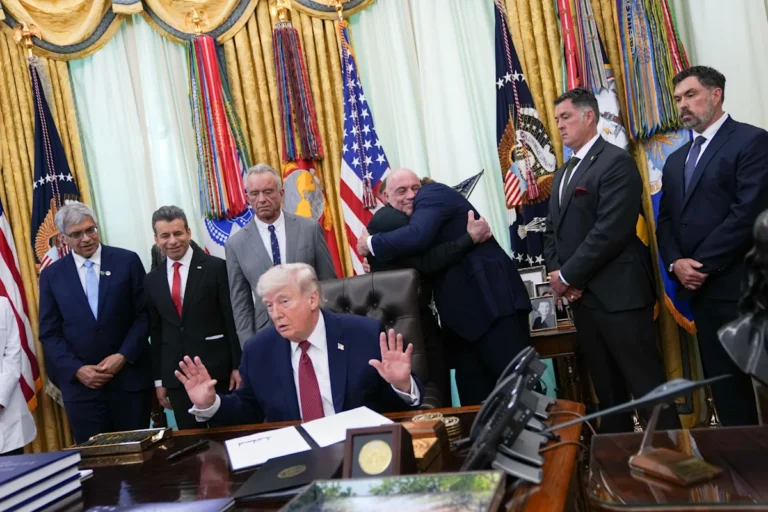
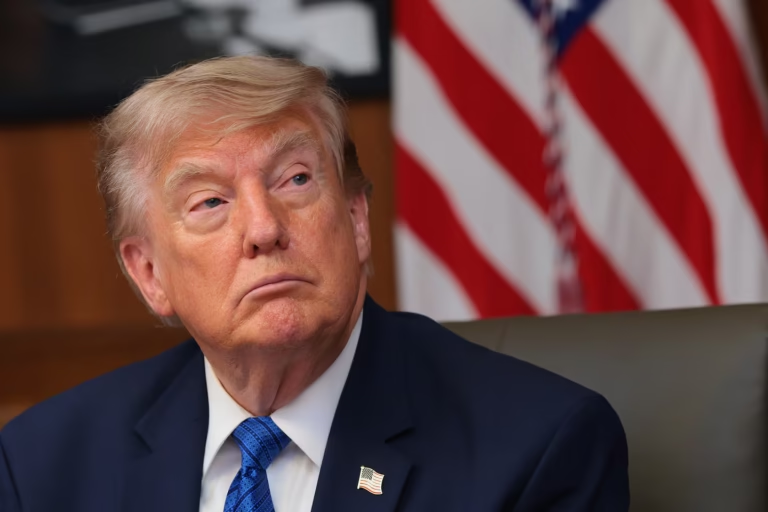
President Trump said Sunday he was still deciding between reaching an agreement with Iran and taking action to “finish them off.” Mr. Trump has kept open the possibility of a new round of major U.S. strikes against Iran. Iranian officials said Sunday that indirect negotiations with the U.S. continue but that Tehran will not change its positions even if Mr. Trump does order a resumption of American attacks on the Islamic Republic.The price of international benchmark Brent crude oil sat around $115 a barrel early Monday after surging last week over supply concerns, as the Middle East and Ukraine crises grind on and the Northern Hemisphere heads into winter, when demand for gas rises.
Saudi-led coalition says three more drones shot down over Riyadh
The Saudi-led coalition backing Yemen’s government in the escalating civil war with the Iran-backed Houthis claimed Monday to have shot down three more drones over the Saudi capital Riyadh, and in the south of the country.
In a post on X, coalition spokesman Maj. Gen. Turki Al-Maliki announced the “interception and destruction of 3 drones in the Riyadh region and the southern region.”
He did not specify where the drones came from, but the Houthis have attacked Saudi Arabia with missiles and drones for weeks in retaliation for the kingdom’s involvement in the Yemen war.
Earlier Monday, al-Maliki said Saudi air defenses intercepted and destroyed a ballistic missile launched by the Houthis at Riyadh. The Saudis have struggled to intercept Houthi missiles and drones on the kingdom’s infrastructure.
Source tells CBS News why report of rift between Netanyahu and his army chief over Iran seems credible
Israeli TV station Channel 12 reported Sunday that Prime Minister Benjamin Netanyahu had fallen out with army chief Eyal Zamir over an unspecified new directive on Iran.
Netanyahu and Defense Minister Israel Katz have both denied the reports, but a senior Israeli source with deep knowledge of the people involved has told CBS News the report of a rift seems credible.
The biggest tell, the source said, is that the Channel 12 report passed through military censorship. All stories by Israeli media that deal with national security must go through the censor before publication. This is key, according to the source, because it indicates that military brass felt it was necessary for the public to have the information before Israeli parliamentary elections on Tuesday.
Had it been false, the military censor would have simply prevented it from being published, the source told CBS News.
The other sign the report may be true is that Zamir, according to the source, is not personally opposed to renewed attacks on Iran – he’s just opposed to the timing. The source said while there are likely new threats emerging from Iran, the question for commanders is whether new strikes need to happen now.
The military appears to believe that nothing requires a response within such a short timeframe, as Israelis prepare to cast their votes, according to the source.
Iranian president says insecurity created by the U.S. is harmful to the entire world
Iranian President Masoud Pezeshkian said Monday that insecurity created by the United States in the Middle East was harming the entire world, as he prepared to travel to Moscow to attend the Gas Exporting Countries Forum (GECF) at the invitation of Russia’s president Vladimir Putin.
Pezeshkian said the GECF has 12 member countries and, together with its eight observer members, oversees more than 70% of the world’s gas supply. He added that a substantial share of the energy needed globally is exported by these nations.
“The problems the United States has created by igniting war in the region and bringing insecurity to Europe have disrupted the free flow of energy,” Pezeshkian said, apparently referring to the ongoing U.S.-Iran war and Putin’s long-standing claim that the U.S. and Europe are responsible for Russia’s ongoing full-scale invasion of Ukraine.
He said his visit to Moscow would include discussions aimed at securing energy transit routes and eliminating insecurity.
Egyptian parliament gives president authority to send troops to Saudi Arabia
Egypt’s parliament on Monday approved a request by President Abdel Fattah el-Sisi that allows him to send troops to Saudi Arabia to help defend the kingdom from attacks by Yemen’s Iran-backed Houthi rebels.
Egypt’s House of Representatives “approved authorizing President Abdel Fattah el-Sisi to take the necessary measures to support the Kingdom of Saudi Arabia,” state-run newspaper Al-Ahram reported.
El-Sisi stressed last week that it would only be a defensive mission, “and does not include an attack on Yemen.”
Under Egypt’s Constitution, the president must consult the National Defense Council and obtain approval from two-thirds of parliament before deploying the armed forces on a combat mission abroad.
Egypt has managed, so far, to stay out of the recent military conflicts across the Middle East and has been involved in some mediation efforts. Some in the country view that as one of el-Sisi’s greatest achievements.
But political analyst Samir Ragheb, a retired army brigadier, told CBS News it was time for Egypt to make good on commitments to help secure the region.
“This is a time of war, not politics and statements,” he said last week. “If Egypt fails to deliver on these promises, they will lose their meaning and amount to nothing more than empty threats.”
Saudi-led coalition claims to have destroyed Houthi missile tunnels and launchers
The Saudi-led coalition backing Yemen’s government said Monday that its forces carried out a military operation targeting areas controlled by the Iran-backed Houthi rebels in response to repeated attacks by the group using ballistic missiles and drones.
In a statement posted on X, coalition spokesman Maj. Gen. Turki Al-Malki said the operation sought to neutralize “the sources of threat,” and included strikes against Houthi military infrastructure.
“The operation included the destruction of (5) tunnels used for storing ballistic missiles, (4) ballistic missile launchers, and a missile storage [unit],” Al-Malki said.
He added that the operation sought to disrupt supply lines between areas under Houthi control, targeting “fortifications, elements, and military equipment along the front lines inside Yemen.”
Al-Malki said the operation was conducted in response to repeated Houthi attacks allegedly targeting civilians and civilian infrastructure in Saudi Arabia and Yemen. He said the coalition would continue taking “deterrent operational measures” to protect Saudi and Yemeni civilians.
He said the operation was conducted “in accordance with the Customary International Humanitarian Law.”
Earlier, al-Maliki said Saudi air defenses intercepted and destroyed a ballistic missile launched by the Houthis at the Saudi capital, Riyadh.
Iran’s foreign minister praises Iran’s resilience
Iranian Foreign Minister Abbas Araghchi has praised his nation’s resilience after nearly eight months of war with the U.S., crediting civil defense efforts, national mobilization and cooperation between the armed forces and diplomatic service.
“The victorious resistance of our beloved country during the enemy’s two recent acts of aggression has been made possible only through the solidarity and mobilization of all military and civilian sectors, as well as the proud presence of all segments of the Iranian people on the front lines of resistance,” he said in a message marking Iran’s Civil Defense Week.
Araghchi added that close coordination between the armed forces and the diplomatic service had brought “great achievements” in safeguarding Iran’s independence and dignity.
He said the foreign ministry would use its diplomatic capabilities to defend the country politically and legally and protect national interests.
“It will spare no effort in pursuing this mission,” Araghchi said.
Last week, intelligence firm Kpler told The Wall Street Journal that the shadow fleet of tankers holding Iran’s offshore oil reserves, which it had been selling to China throughout the war against the U.S. and Israel, had run dry.
The millions of barrels of crude, held on dozens of oil tankers in Asian water, ran out in mid-October, Kpler told the outlet, with a U.S. naval blockade preventing Iran from replacing the crude being sold to Chinese refineries.
The U.S. naval blockade has cost Iran at least $25 billion in oil revenue, according to U.S. Central Command.
Iran’s parliament speaker Mohammad Bagher Ghalibaf on Sunday called for a campaign to cut gas consumption by at least 10%, with officials anticipating shortages as winter approaches.
Tanker struck Friday in the Strait of Hormuz, maritime monitor says
A tanker was struck in the Strait of Hormuz on Friday, the U.K. navy’s Maritime Trade Operations center said Monday.
The maritime monitor said it received a “verified time-late report” of the incident, in which “a tanker transiting outbound was struck by an unknown projectile, disabling the vessel.”
In a post on X, UKMTO said “the crew have been reported safe.”
Iran claimed to have struck at least four tankers near the strait on Thursday last week, but there was no corroboration of its claims, and President Trump accused the Iranian regime of inventing attacks on commercial vessels in a bid to hike up global oil prices ahead of the U.S. midterm elections.
Israel defense chief denies report of rift between Netanyahu and army chief over Iran
Defense Minister Israel Katz on Monday rejected reports of a rift between Israel’s army and its civilian leaders – most notably Prime Minister Benjamin Netanyahu – over the prospect of new strikes in the war with Iran as “entirely baseless.”
Israel’s Channel 12 reported Sunday, citing unnamed sources, that there had been a confrontation between Netanyahu and army chief Eyal Zamir over an unspecified new directive.
Netanyahu dismissed the report as “rubbish” during a TV appearance, and Katz characterized it as an effort to cast doubt on the Netanyahu administration’s judgement on the eve of close parliamentary elections that could unseat him.
“The reports about gaps between the political echelon and the IDF [army] on the Iran issue are entirely baseless and false,” Katz said on X, insisting there was “complete” coordination between the two.
In its report, Channel 12 said Zamir had demanded a detailed discussion as well as legal guarantees and the signatures of the political leadership before carrying out the directive he had received. The outlet did not offer details of the purported directive, but cited sources saying there were concerns within the army that the war might be exploited for political gain.
CBS/AFP
Brent crude oil hovers around $115 a barrel after small drop
The price of Brent crude oil hovered around $115 a barrel early Monday after surging at the end of last week over global supply concerns linked to the ongoing wars in the Middle East and Ukraine, as the northern hemisphere heads into the gas-hungry winter.
President Trump has fueled speculation that he could order a resumption of U.S. strikes on Iran after next Tuesday’s midterm elections.
The president told Fox News on Sunday: “I have a decision to make: Do I finish it off, which would be very easy to do, or do I make a deal? That’s all.”
Additional U.S. forces, including a third aircraft carrier group, have been sent to the region, though U.S. diplomatic staffing levels have been reduced, and sources told CBS News last week that the overall American military footprint in the Middle East was also being quietly reduced.
CBS/AFP
Iran says outcome of Israeli elections “makes no difference”
Iran’s foreign ministry said Monday that the outcome of the Israeli elections in which Prime Minister Benjamin Netanyahu is facing a tight race will make “no difference”.
“It makes no difference to us who, in these elections, takes the helm of a regime that has brought nothing but violence and massacres to our region,” said ministry spokesman Esmaeil Baqaei in a weekly press briefing, a day ahead of the Israeli legislative polls.
Netanyahu claimed Sunday that Israel had “intelligence signs that our enemies, Iran and its proxies, could challenge us with attacks in order to disrupt the elections.”
CBS/AFP
Saudi Arabia, Turkey and Pakistan to hold talks with Iran Monday in Tehran, officials say
Senior officials from Saudi Arabia, Turkey and Pakistan will hold talks on regional security with Iranian officials on Monday in Tehran, Iranian and Saudi authorities said.
The meeting will follow eight months of war in the Middle East and recent U.S. and Israeli threats of renewed attacks against Iran.
“As agreed, Saudi Defense Minister Khalid bin Salman, Pakistani army chief General Asim Munir and Turkish intelligence chief Ibrahim Kalin will participate in this meeting,” said Ali Bagheri Kani, the deputy secretary of Iran’s Supreme National Security Council.
In an interview with state television, Kani said the meeting will also include Iran’s security chief, Mohsen Rezaei.
Saudi Deputy Minister for Public Diplomacy Dr. Rayed Krimly confirmed that the kingdom’s defense minister was heading a delegation to Tehran on Monday.
“The visit comes as part of the continued efforts by the Makkah Joint Defense Agreement countries for de-escalation between parties involved in the ongoing crisis,” Krimly said in a post on X.
It is aimed at “promoting dialogue and diplomatic solutions, in support of the mediation efforts carried out by the State of Qatar and the Islamic Republic of Pakistan,” he added.
Conflicting claims after Houthis say they attacked airport in Saudi capital hours after it reopened
The Saudi-led military coalition fighting alongside the Yemeni government in the country’s civil war said Monday it intercepted a ballistic missile fired by Yemen’s Houthis, after the Iran-backed group claimed a new attack on the international airport in Riyadh.
A Houthi spokesperson said the group launched attacks the airport on Sunday, just hours after it resumed flights. Deadly strikes by the rebel group earlier this month had forced the airport to shut down operations for more than two weeks .
Coalition spokesman Turki Al-Malki said on Monday that air defenses “intercepted and destroyed a ballistic missile” fired by the Houthis toward Riyadh and destroyed two ballistic missile launchers in Yemen’s capital Sanaa.
Houthi military spokesman Yahya Saree said Monday the group “successfully targeted” the airport with a ballistic missile, and struck oil pumping stations with drones.
Saree previously warned that Riyadh airport was still “unsafe” and a “military target,” as the airport prepared to resume international flights.
The airport closure was a major blow for Saudi Arabia, forcing the postponement of the kingdom’s flagship investment conference until 2027 and disrupting travel plans for thousands of passengers.
Saudi Arabia and the government it backs in Yemen have come under sustained attack in recent weeks from the Houthis as a years-long truce broke down over the summer, shifting the focus of the wider U.S.-Iran war that erupted in February.
CBS/AFP
Netanyahu warns Iran may use attacks to disrupt Tuesday’s Israeli elections
Prime Minister Benjamin Netanyahu said that Iran and its allies might try to disrupt Tuesday’s Israeli elections, warning the Islamic republic against any hostile acts.
“The IDF is prepared in both defense and offense,” Netanyahu said in a video released by his office on Sunday, using the acronym for the Israeli army.
“We have intelligence signs that our enemies, Iran and its proxies, could challenge us with attacks in order to disrupt the elections,” he added. “Don’t test us. You will suffer disproportionate blows.”
CBS/AFP
Trump says he’s weighing deal with Iran against action to “finish them off”
President Trump said Sunday morning that he’s deciding between reaching an agreement with Tehran and taking action to “finish them off,” after suggesting Friday that Washington “may do another little Epic Fury,” in reference to the U.S. and Israel’s joint military campaign against Iran.

“Now, my question is, do I make a deal with them, or do I finish them off?” said Mr. Trump in an interview with Fox News’ “Sunday Morning Futures.”
He also claimed that the U.S. now controls the Strait of Hormuz and criticized former President Barack Obama for the Joint Comprehensive Plan of Action, or JCPOA, which is better known as the Iran nuclear deal. Obama signed the agreement in 2015, but Mr. Trump pulled out of it during his first term in office.
Iran says potential new U.S. strikes wouldn’t change its position
Iran’s Foreign Minister Abbas Araghchi said Sunday that a potential resumption of war with Israel and the United States would not change his country’s positions.
The remarks came amid mounting tensions between Tehran and Washington after President Trump said Friday that Washington “may do another little Epic Fury,” referring to the U.S.-Israeli campaign on Iran that began on Feb. 28.
“Recently, there has been talk of a new war, but I am already thinking about the post-war period. Whether there is war or not, our policies remain the same,” said Araghchi during a televised event in Tehran.
“They have already done so twice and have seen the results. If they want to try again, they know they will achieve no different outcome from those of the past.”
Direct negotiations between the U.S. and Iran have appeared to stall for weeks, but Iranian foreign ministry spokesperson Esmaeil Baqaei said earlier Sunday that Tehran had not closed the window of diplomacy and messages were still being passed to the U.S. via intermediaries.
CBS/AFP