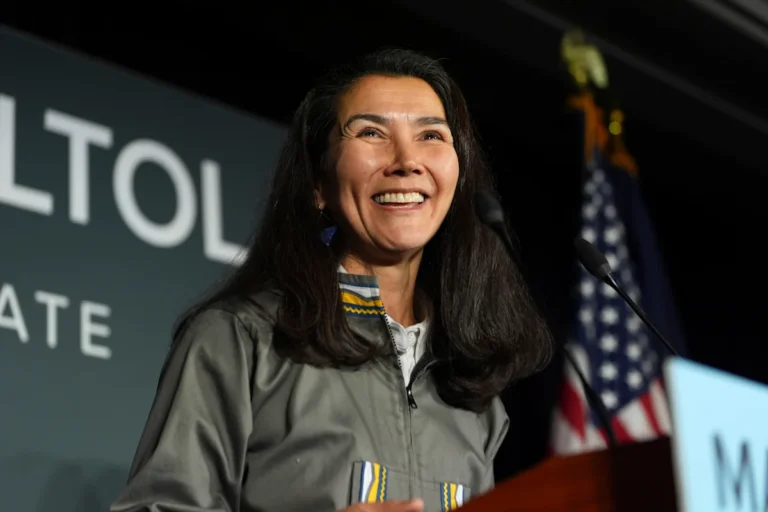

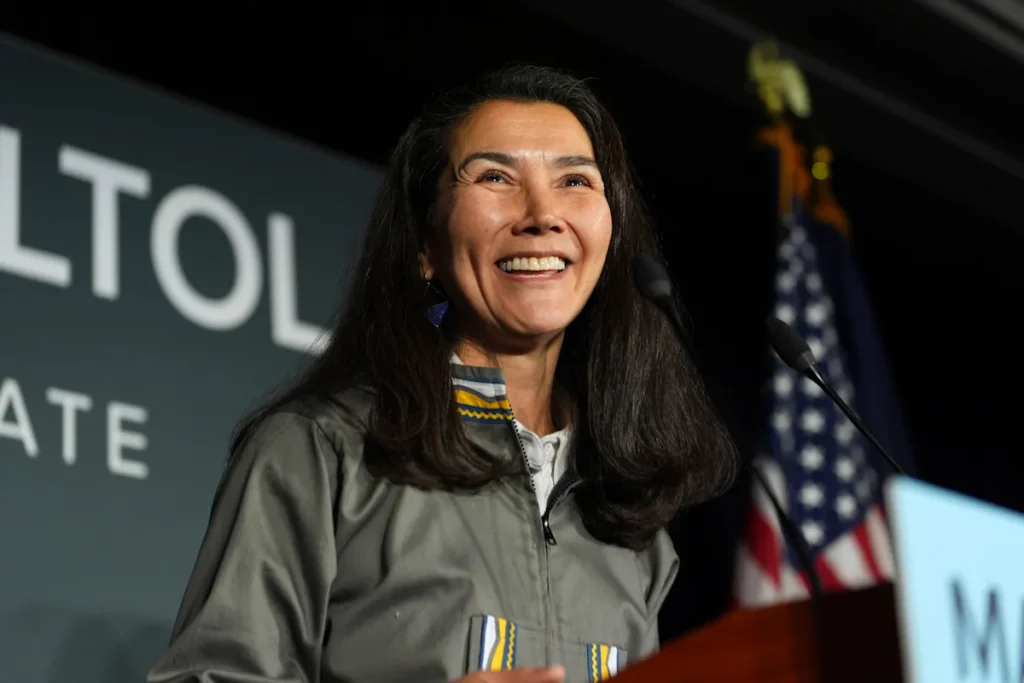
Democrat Mary Peltola was declared the victor in Alaska’s Senate race Tuesday, but Justice Department officials say their interest in the contentious campaign has not waned.
A criminal grand jury investigation remains underway into whether Peltola staffers or others recruited a spoiler candidate with a similar name to incumbent Dan S. Sullivan (R) in an effort to confuse voters – allegations Peltola has denied.
In a parallel civil case, the Justice Department continues to appeal a federal judge’s ruling last month denying the agency’s extraordinary request to delay certification of the vote over concerns the outcome could be tainted by that potential effort to siphon efforts away from the incumbent.
“The priority of investigating a criminal potential fraud doesn’t stop because of the election, no matter who wins or loses,” Attorney General Todd Blanche told reporters last week.
When asked whether his department would drop those legal battles if Peltola took a significant lead, Blanche added: “No. That investigation remains where it was, which means I’m not going to talk about it.”
Still, after a flurry of activity on both legal fronts in the run-up to Election Day, there have been few public signs of progress since the Nov. 3 vote. After the race was called late Tuesday evening, a Justice Department spokesperson said the agency stands by Blanche’s earlier remarks.
Peltola has denied any involvement in a scheme to confuse voters. The other Sullivan on the ballot – retired teacher Dan J. Sullivan – has repeatedly maintained his candidacy was legitimate.
He ultimately netted fewer than 5,000 votes, less than half the more than 12,000-vote lead Peltola secured over her Republican opponent.
Democrats have condemned both the civil suit and the criminal investigation as a norm-shattering effort by the Justice Department to influence the election’s outcome.
Michael J. Heyman, the U.S. attorney in Alaska, took the unusual step of confirming the existence of the grand jury investigation, which had been underway since the summer, at a news conference five days before the election.
Such probes are typically carried out in secret and Justice Department guidelines typically advise prosecutors from taking investigative steps before an election that could be seen as a sign of political bias.
Though Heyman declined to discuss details of the probe, The Washington Post has reported that prosecutors have issued dozens of subpoenas and sent target letters and document preservation warnings to those it believes might have been involved in recruiting Dan J. Sullivan.
Among the recipients was Marc Elias, a prominent Democratic voting rights and election lawyer, whose firm represented Peltola’s campaign. A lawyer at the firm, whose text messages were quoted in a New York Times story, documenting the alleged recruitment effort also received a target letter, according to a person familiar with the matter who spoke on the condition of anonymity to discuss details of the ongoing probe.
Elias dismissed those warnings as the latest attempt by the Justice Department to target President Donald Trump’s political enemies.
The Justice Department’s civil suit was filed just weeks before the vote and as early voting was underway. Department lawyers had asked the court to suspend certification, in the event of a narrow Republican loss, until an investigation could be carried out into whether the outcome had been tainted.
In her Nov. 1 ruling dismissing the case, U.S. District Judge Sharon L. Gleason said she had no authority to order such a probe and noted the department had offered no suggestion as to how such an investigation could be carried out while respecting the secrecy of voters’ ballot choices.
The department immediately appealed Gleason’s ruling to the San Francisco-based U.S. Court of Appeals for the 9th Circuit, which has so far shown no sign of taking up the matter quickly.
The court has set a briefing schedule for arguments that extends until Jan. 11 – more than a week after Peltola is expected to be sworn in.
The Justice Department has not asked to accelerate that schedule or moved to withdraw its case.
Richard L. Hasen, a prominent election law scholar at UCLA, urged the appellate judges not to let the matter linger in a “friend of the court” brief filed Friday.
“This Court should send a swift and clear message to the federal government and the country,” Hasen wrote in the filing, “that the State of Alaska, and Alaska alone, has the right to certify the winner of its elections.”
Patrick Marley contributed to this report.