




Crisis of Massacres and Kidnappings Deepens in Nigeria’s Middle Belt
By Mike Odeh James
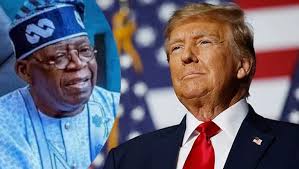
(Abuja) To the surprise of the US diplomatic community and many media, President Donald Trump has warned of taking military action in Nigeria over continued attacks on Christians by Fulani ethnic militia and ISIS-allied insurgents.
The unprecedented warning, issued by a sitting American president, was made in a strongly worded message on his Truth Social platform on Saturday, November 1, 2025.
Trump, who began his second non-consecutive term in January, said he had ordered the Pentagon to prepare for action if “Islamic terror attacks on Christians” continued.
Trump Accuses Nigeria of Allowing Christian Killings

Trump has escalated diplomatic tensions with Nigeria, threatening possible U.S. military intervention and accusing President Bola Ahmed Tinubu’s government of permitting “the mass killing of Christians” in the country’s northern and Middle Belt regions.
He added: “If we attack, it will be fast, vicious, and sweet—just like the terrorist thugs attack our cherished Christians.”
The U.S. president ended his post with a stark warning in capital letters:
“THE NIGERIAN GOVERNMENT BETTER MOVE FAST!”
The crisis is expected to trigger a U.S. congressional review of defense cooperation, arms sales, and humanitarian assistance to Nigeria, considered one of the United States’ strongest allies in Africa.
Trump’s intervention has once again drawn global attention to a humanitarian disaster that the nation—and the world—can no longer ignore. Yet, until Oct. 31, 2025, the Administration had barely noticed the conflict in Nigeria, and the U.S. Ambassador to Nigeria, Richard M. Mills, Jr. had denied the claims of those who decried a genocide against Christians there.
U.S. Cabinet Officials Echo Warning
Following Trump’s remarks, senior U.S. officials expressed immediate support for the president’s aggressive stance.
U.S. Secretary for War Pete Hegseth posted on X (formerly Twitter):
“Yes sir. The killing of innocent Christians in Nigeria—and anywhere—must end immediately. The Department of War is preparing for action. Either the Nigerian government protects Christians, or we will eliminate the Islamic terrorists committing these atrocities.”
U.S. Secretary of State Marco Rubio also condemned the violence, largely attributed to Fulani ethnic militias and jihadist groups.
“The ongoing slaughter of thousands of Christians in Nigeria by radical Islamists and Fulani ethnic militias is both tragic and unacceptable. As @POTUS said, the United States stands ready, willing, and able to act,” Rubio wrote.
The diplomatic rift deepened after Trump’s administration moved on Friday to re-designate Nigeria as a “Country of Particular Concern (CPC)”—a U.S. State Department label for nations accused of severe violations of religious freedom.
Trump told lawmakers that Christians in Nigeria were facing “an existential threat,” urging Congress to investigate what he termed “mass slaughter by radical Islamists.”
The move in Washington has caused palpable unease in Abuja, raising fears of punitive economic sanctions and a suspension of crucial U.S. military cooperation, which focuses heavily on counter-terrorism efforts against Boko Haram and ISWAP.
Abuja Rejects Allegations, Citing Sovereignty
President Bola Ahmed Tinubu swiftly dismissed Trump’s statement as “misguided and disrespectful of Nigeria’s sovereignty.”
In a statement signed by his Special Adviser on Information and Strategy, Bayo Onanuga, the Nigerian leader asserted that the country “protects citizens of all faiths” and upholds religious freedom as a “core national value.”
“Religious freedom and tolerance have been a tenet of our collective identity. Nigeria does not condone persecution in any form,” the statement read, pushing back against the narrative that the state is complicit in the violence.
Southern Taraba: 300,000 Christians Displaced
The political and diplomatic crisis unfolds against a backdrop of a worsening humanitarian disaster in Nigeria’s Middle Belt.
Southern Taraba State is facing a massive displacement crisis following the relentless activity of Fulani ethnic militias.
Bishop Mark Maigida Nzekwain of the Wukari Catholic Diocese told TruthNigeria that over 300,000 Christians—including Catholics, Methodists, and Baptists—have been displaced.
He described the attacks as a “systematic and relentless campaign” against Christian communities.
“Our churches are empty, our villages burnt, and our members scattered. This is not random violence—it is a deliberate attempt to erase Christian presence from Southern Taraba,” the bishop said.
He confirmed that many communities in Wukari, Takum, and Ibi are now deserted.
“A huge humanitarian crisis is looming. Families are homeless, without food or medicine. The world cannot look away,” he warned.
Local reports confirm the latest wave of attacks—on October 29, 2025—targeted Unom, Yongugba, Tornyi, and Mbayongu villages, resulting in the destruction of dozens of churches and hundreds of homes.
Officials say the violence is part of a broader pattern of attacks by Fulani Ethnic Militia, who have been responsible for a most recent mass killings of Christians in rural communities across Taraba, Benue, Plateau, and Southern Kaduna states.
Complexity of the Conflict
Trump’s dramatic threat marks the first time an American president has openly warned of possible armed action against Nigeria—Africa’s most populous nation and largest economy.
He claimed that “thousands of Christians are being killed” and that “radical Islamists” are orchestrating a “mass slaughter.”
“The world cannot stand by while the faith of Christ is wiped out from Africa’s most populous nation. This is worse than genocide,” Trump declared.
His statements echo lobbying efforts by U.S. evangelical and human-rights groups that have long accused Abuja of failing to protect Christian populations.
However, security analysts stress that Nigeria’s widespread violence is highly complex, involving organized land-grabbing campaigns by Fulani terrorists seeking to seize ancestral Christian farmlands and territory across the Middle Belt.
The UN Office for the Coordination of Humanitarian Affairs (OCHA) estimates that more than 3 million Nigerians are displaced, while tens of thousands have died since 2010.
Rev. Joseph Haruna of Takum captured the desperation on the ground:
“We have buried too many. Our people are killed almost every week. If the Nigerian government won’t defend its citizens, maybe the world will.”
Polarized Reaction and Diplomatic Fallout
The re-designation of Nigeria as a CPC nation has deeply polarized the country’s faith communities.
TruthNigeria correspondents report that most Christian groups from the Middle Belt, North, and South support Trump’s position, while Muslim leaders—especially in the North—have condemned it.
Prof. Ishaq Akintola, leader of the Muslim Rights Concern (MURIC), accused the Christian Association of Nigeria (CAN) of betraying the country by “confirming” claims of Christian genocide.
In response, CAN, along with several prominent Christian leaders—including Dr. Rev. Sam Albert Magai of the Kings Worship Centre, Sabo Kaduna—publicly reaffirmed their position that Christians in Nigeria are victims of an ongoing campaign of genocide.
They cited the widespread, systematic attacks on Christian communities by Fulani militias in the Middle Belt as evidence of deliberate religious cleansing.
David Onyilokwu Idah, Director at the International Human Rights Commission, Abuja, warned of the consequences.
“The Christian persecution narrative resonates with Trump’s evangelical base. But for Nigeria, the risk of sanctions, loss of aid, and threat of invasion is devastating,” he told TruthNigeria.
Idah advised the Tinubu government to “acknowledge the crisis” and launch credible plans to end the violence instead of funding campaigns that deny Christian persecution.
“If Tinubu demonstrates strong action against both Fulani terrorists and jihadists, Trump could reverse his threat and even strengthen Nigeria’s military support,” Idah suggested.
Mike Odeh James is an award-winning reporter covering conflict, crisis, and human rights abuses for TruthNigeria.